

Automated Financial Reporting Vs Manual Tracking: Which Is Better For Your Rental Portfolio?
December 9, 2025 | by robert@trenven.com
Managing rental property finances used to mean drowning in spreadsheets, receipts, and late-night reconciliation sessions. Today's property managers have a choice: stick with manual tracking methods or embrace automated financial reporting systems that promise to revolutionize how you handle money.
The question isn't just about convenience: it's about growth, accuracy, and your sanity. Let's dive into the real differences between these approaches and help you decide which path makes sense for your rental portfolio.
The Manual Tracking Reality Check
Manual financial tracking means handling everything by hand: recording rent payments in spreadsheets, filing physical receipts, calculating expenses on paper, and spending hours each month balancing books.
The Good Side
Manual tracking feels familiar and costs almost nothing upfront. You control every entry, understand exactly where each number comes from, and don't need to learn new software. For tiny portfolios with just 2-3 units, manual systems can work: at least temporarily.
The Not-So-Good Side
Here's where reality hits hard. Manual tracking for a 100-unit portfolio typically requires 20-25 hours per month just for basic payment processing and bank reconciliation. That's nearly a full work week spent on data entry alone.
Manual systems are error-prone. One misplaced decimal point or forgotten expense can throw off your entire monthly report. Physical receipts get lost, damaged, or misplaced right when you need them for tax season. And forget about real-time visibility: you won't know about cash flow problems until your monthly reconciliation reveals the damage.

Scaling Problems Hit Fast
Most property managers hit a wall around 15-20 units with manual tracking. The administrative burden becomes overwhelming, tenant communications suffer, and financial mistakes multiply. Growth stalls because you're spending all your time managing paperwork instead of managing properties.
Automated Financial Reporting: The Modern Solution
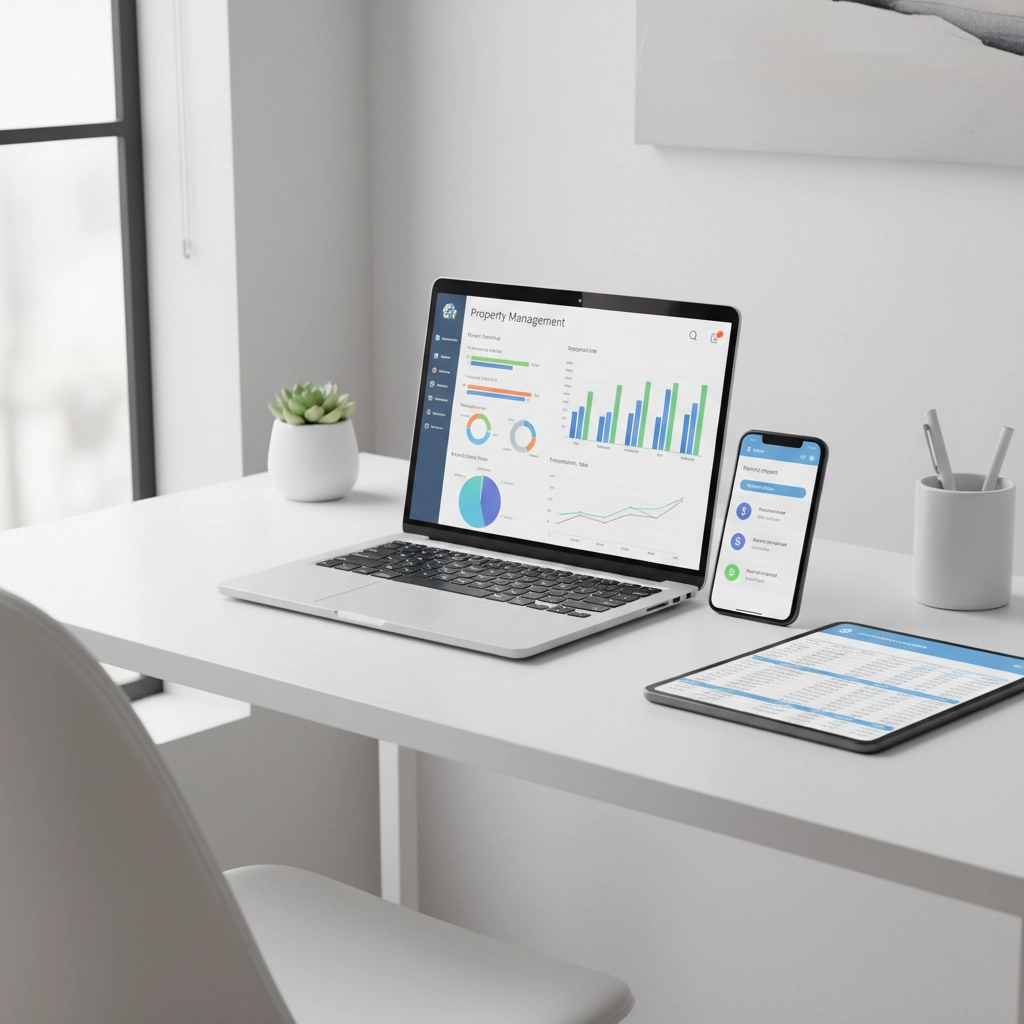
Automated systems handle the heavy lifting through property management software that connects directly to your bank accounts, categorizes transactions, and generates reports without manual intervention.
Game-Changing Benefits
Accuracy Improvements: Automated systems eliminate data entry errors that plague manual tracking. Bank synchronization ensures every transaction gets recorded correctly the first time.
Time Savings: Instead of 20+ hours monthly on bookkeeping, automated systems reduce routine financial tasks to just a few hours. Property managers report scaling from 20 units to 200+ units while spending less time on finances than before.
Real-Time Visibility: Know your cash position, payment status, and property performance instantly. No more waiting until month-end to discover problems.
Better Tenant Relations: Automated systems improved on-time payment rates from 79.7% to 88.4% across all portfolio sizes through consistent reminders and easy payment options.
Seamless Integration: Direct connections to QuickBooks and other accounting software eliminate duplicate data entry and reduce bookkeeping costs.
The Investment Factor
Automated systems require monthly software subscriptions and initial setup time. However, the time savings typically pay for the software costs within the first month of use.
Head-to-Head Comparison
| Feature | Manual Tracking | Automated Reporting |
|---|---|---|
| Monthly Time Investment (100 units) | 20-25 hours | 2-5 hours |
| Error Rate | High (human entry errors) | Minimal (automated validation) |
| Real-Time Data | Not available | Instant dashboard updates |
| Scalability | Ceiling around 15-20 units | Easily handles 200+ units |
| Tax Preparation | Hours of receipt hunting | Organized reports ready instantly |
| Payment Rate Improvement | Manual follow-up only | 79.7% to 88.4% improvement |
| Data Backup | Vulnerable to loss | Cloud-based security |
| Accessibility | Office/home computer only | Any device, anywhere |
Which Approach Works for Different Portfolio Sizes?
1-5 Units: Manual Could Work (But Why Suffer?)
With just a few properties, manual tracking is technically possible. However, even basic automation tools save enough time to justify their cost. Starting with automated systems early builds good habits and prepares you for growth.
6-30 Units: Automation Becomes Essential
At this scale, manual tracking starts breaking down. The time savings from automation free you up for property acquisition, tenant relations, and business development. The improved accuracy prevents costly mistakes that can eat into profits.
30+ Units: Automation Is Non-Negotiable
Large portfolios require sophisticated financial tracking that's impossible to handle manually. Automated systems provide the investment-grade reporting needed for strategic decisions, bank relationships, and portfolio optimization.

Growth-Focused Investors: Automation Enables Scale
If your goal is building a substantial rental portfolio, automated financial reporting becomes your competitive advantage. The ability to manage 100+ units efficiently while maintaining accuracy and tenant satisfaction is what separates successful property managers from those stuck in administrative quicksand.
Real-World Success Stories
Property managers consistently report dramatic improvements after switching to automated systems:
- Time Recovery: Reclaiming 15-20 hours monthly for business growth activities
- Payment Improvements: Significant increases in on-time rent collection through automated reminders
- Error Reduction: Near-elimination of financial reporting mistakes
- Scaling Success: Growing from small portfolios to enterprise-level operations
Making the Switch: What to Expect
Transitioning to automated financial reporting typically takes 2-4 weeks for full implementation. Most property managers see immediate time savings and improved accuracy within their first month.
The learning curve is minimal: modern property management platforms prioritize user-friendly interfaces that make financial tracking intuitive rather than complicated.
The Bottom Line
For most rental property operations, automated financial reporting delivers superior results through improved accuracy, better cash flow visibility, enhanced tenant relations, and most importantly, the ability to scale without sacrificing your time or financial control.
Manual tracking might seem cost-effective initially, but the hidden costs: your time, errors, missed opportunities, and growth limitations: make it the more expensive choice in the long run.
Ready to transform your rental property finances from time-consuming burden to streamlined asset? Modern property management platforms like Trenven combine powerful automation with intuitive interfaces, helping property managers of all sizes achieve better results with less effort.
Get Started Today
See how Trenven's automated financial reporting can revolutionize your rental portfolio management. Visit trenven.com to explore our comprehensive property management solutions and start your journey toward effortless financial tracking.
The choice is clear: embrace automation and watch your portfolio grow, or stay stuck in spreadsheet purgatory. Which path will you choose?
RELATED POSTS
View all


New Rental Regulations Got You Stressed? The Ultimate Compliance Guide for Property Owners
December 12, 2025 | by robert@trenven.com
Struggling to Scale Your Rental Portfolio? Here's How 10 Smart Property Owners Manage 25+ Properties Effortlessly
November 15, 2025 | by robert@trenven.com

The Landlord's Guide to Stress-Free Maintenance with AI
January 22, 2026 | by robert@trenven.com